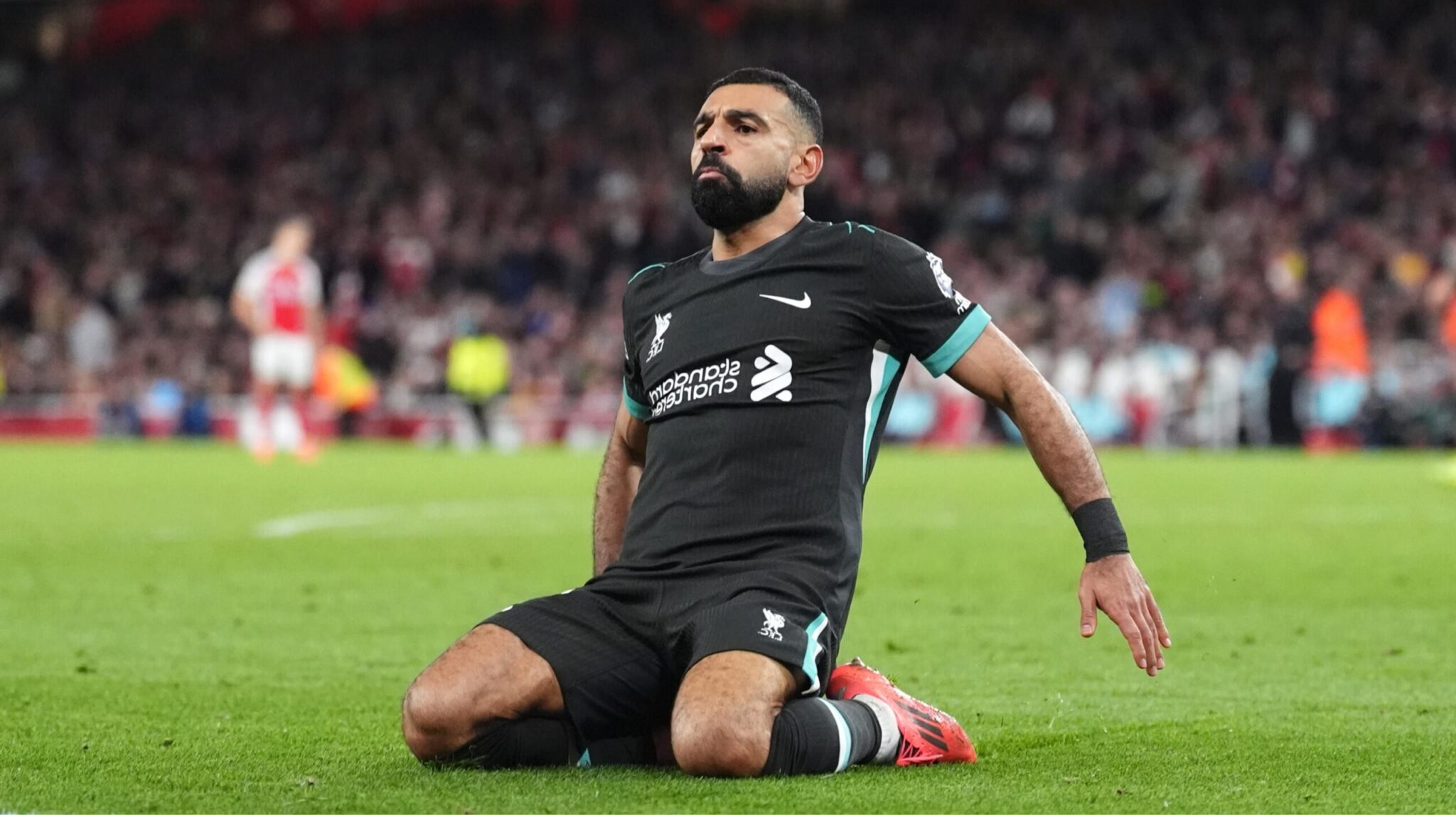
The Egyptian has distanced himself from the club. Even Trent didn’t leave on such bad terms.
It feels like everyone has already said how wrong Mohamed Salah was. He put himself above the club, went into open conflict with the manager, and did it during what is already a terribly difficult season—one that feels even heavier compared to the previous campaign, when Liverpool steamrolled everyone and won the Premier League by a massive margin.
Today’s Liverpool is bad—and Salah is just as bad personally. The contrast with last season makes it especially glaring: the Egyptian produced otherworldly numbers and, in a brilliant Liverpool side, was the most brilliant of them all. In a top team he was the top player. Now, in a team that can fall apart at any moment in any match, Salah looks like one of the biggest flops. People expect him to carry—and he doesn’t. Yet just last season he was shining.
His fiery speech came at the worst possible place and time. Expecting sudden support after saying those things at such a difficult moment for the team is, to put it mildly, strange. Especially given how he’s actually playing. This is definitely not the case where Salah is the best player on the pitch and the rest of the team is dragging him down. It’s the opposite: when Salah is on the pitch, the team is worse—or at the very least, not better.
The fans’ anger at his words and the timing of them is completely understandable. What’s surprising is that many are shocked it was Salah who said them. How could he? He’s been at Liverpool so long, achieved so much. He’s one of us! How could he even say that?
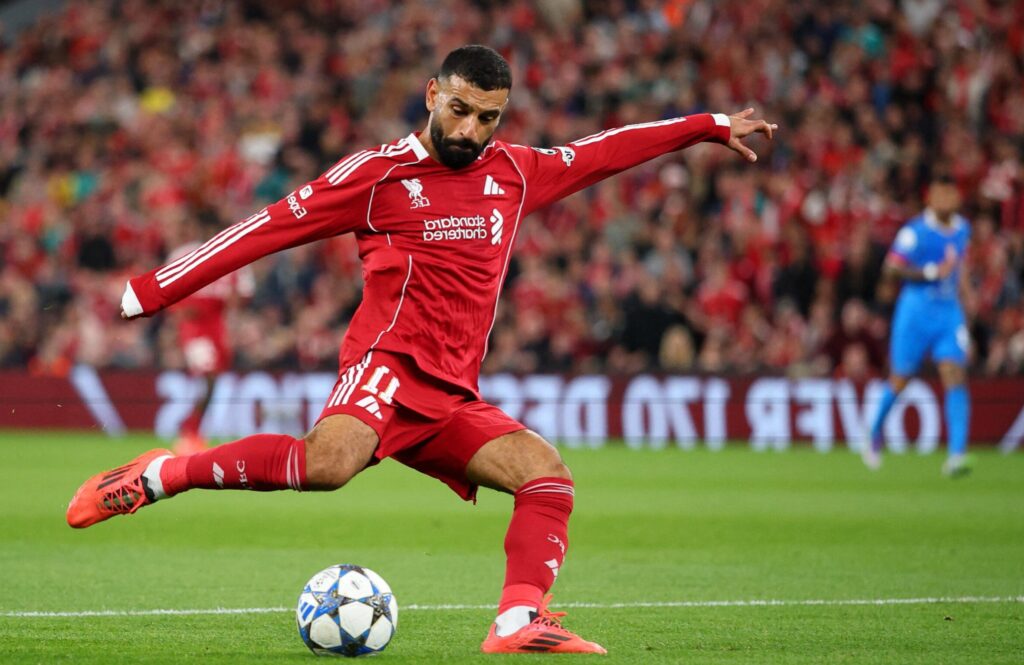
Well, that’s exactly how he could—and did. Salah is a huge player. And a forward. As the great Guus Hiddink once said, a good striker has to be an asshole. In this context, “asshole” simply means “egoist.”
Why would anyone be surprised that a big player thinks VERY highly of himself? That he sees everyone else as guilty except himself? Does that speak to problems with critical thinking? Quite possibly. Should everything you think be said publicly? Absolutely not. But sometimes ego outweighs good sense, it happens. And in those moments what’s on your mind ends up on your tongue. Is that right? Of course not.
Yet there’s nothing surprising about Salah having these thoughts. It’s classic big-player, strong-personality thinking: “I’m the best!”, “They’re underrating me,” “It’s not me, it’s someone else.” Textbook stuff!
This is in no way an attempt to justify Salah. Once again: he acted idiotically. Emotions overrode reason. Or if reason actually prompted that statement, then reason made a mistake. But there’s nothing shocking that it came from Salah.
Perhaps he’s also being crushed right now by the weight of last season. Mohamed was so good—he had the best season of his life! And then such a sharp drop-off, both personally and for the whole team. Salah turns 34 next year. He probably realises he’ll never reach the 2024/25 heights again. That’s likely why he’s reacting so sharply to failure now.
No doubt Salah imagined a different ending to his Liverpool career. The last thing he would have wanted was to leave the biggest club of his life on a sour note. Yet he created that sour note himself. His post-match comments after Leeds will be much harder for fans to forget and forgive than a poor season on the pitch.
Trent Alexander-Arnold’s departure is still fresh in the memory. There was plenty of negativity there too. But Trent, whatever you think of him, kept his mouth shut while he was still at Liverpool.
He had probably agreed everything with Real Madrid in advance. Liverpool even got a tiny fee—otherwise they might have received nothing at all if Madrid hadn’t wanted him for the Club World Cup. But firstly, the defender left after winning the Premier League. Secondly, he never said a bad word about teammates, the manager or the fans. And thirdly, Klopp personally backed him, which certainly influenced how many people saw it.
In the end, when Trent played his last game at Anfield in a Liverpool shirt, the applause drowned out the boos. There was definitely some bitterness left for fans and the club. But in terms of public perception, the story ended far less ugly than it could have. Everyone at least tried to put on a brave face.
Putting on a brave face in Salah’s situation is much harder. Until very recently it was unthinkable that Mohamed’s departure could be more scandalous than Trent’s. Now it looks like reality. First, Salah spoke very loudly—and demonstratively distanced himself from everyone. His statement was all “I” detached from the team. Liverpool’s anthem says “You’ll Never Walk Alone.” Well, Salah deliberately walked alone. He wasn’t abandoned—he stepped aside himself.
Second, unlike with Trent, there probably won’t be the softening factor of a big trophy win. At least there are no signs of it right now—neither in the summer nor, especially, in winter. It looks like Salah, having just signed a new contract, is abandoning the team at the first sign of trouble under Slot and blaming everyone except himself. Even 250 goals, 116 assists and nine trophies won’t outweigh the overall negative effect right now.
In time everyone will calm down and maybe even forgive each other. But right now it all looks really bad. And it’s very sad that one of Liverpool’s greatest legends of the 21st century is ending his time at the club this way.
Nothing has been officially announced yet, but there’s no doubt it’s the end. And perhaps the sooner it happens, the better. It would be great if Salah plays against Brighton at Anfield, the fans manage to put everything aside and give him a warm reception despite everything, and then Mo goes to the Africa Cup of Nations and afterwards to a new club. Given all the recent circumstances, a nicer farewell simply isn’t possible.